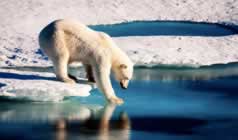
Climate change is forcing many animals to leave their usual habitat. When it gets too hot or when extreme weather events occur, animals must move to new areas to find food. Sometimes they can't move fast enough. Sometimes there is nowhere to go. This puts many animal species at risk of dying out and becoming extinct.
The polar bear is an example of an animal being affected by climate change. The Arctic is heating up twice as fast as the rest of the world. That causes the ice that polar bears depend on to melt away. No ice means no seals, the polar bear's main food. The bears must then look for other food sources, sometimes even scavenging for human food. This can lead to dangerous run-ins with people.
Animals and plants depend on each other. If climate change forces animals to move, but the plants or prey they eat do not move too, survival gets tough. For instance, if climate change forces a bird to relocate, but its berry-producing tree does not, the bird loses its food source. Unless it finds a new one, it could starve.
Sometimes animals can help with the effects of climate change.
• African forest elephants spread seeds, fertilize soil, dig wells and clear space for new plant growth.
• Whales absorb more than 30 tons of carbon in their lifetimes.
• Fish poop stores carbon, preventing it from entering the atmosphere.
• Beavers help prevent forest fires by building dams that keep the soil moist.
There are many more helpful animals. When their habitats are healthy, animals help control the global climate system. That is why it is so important to protect all species and their habitats.
Source: wordville.com/ReadingComp/ClimateAnimals.html Animals and Climate Change
©Courseware Solutions Wordville.com for Fun English Language Arts Learning


