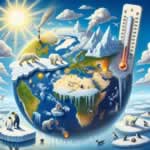
Scientists have many ways to study climate change. They gather data from the ground, the air, the sea, and even from space. By measuring things like carbon dioxide levels, temperature, sea level, and weather patterns, changes in climate can be tracked over time.
Digging into old glaciers is like reading a history book of our climate. Scientists can see how much carbon dioxide was in the air hundreds of thousands years ago by studying the air bubbles trapped in the ice. They have found that there is more carbon dioxide in the air now than there has been in the past 650,000 years.
Scientists also keep an eye on how hot or cold it is. They collect temperatures from thousands of weather stations around the world. The data is telling us that Earth is not just getting warmer, it's getting warmer faster than ever before.
Tracking changes in sea level is another way to study climate change. Special satellites in space use radio waves to measure how deep the oceans are. Jason-3, a NASA satellite, goes around the Earth every 10 days keeping an eye on sea levels. The data shows that ocean levels have risen by 8 inches since 1900.
Extreme weather events like heat waves, droughts, storms and forest fires also tell us a lot about climate change. Scientists see a strong link between the planet's warming and the increase in extreme weather.
New ways to study climate change are being developed all the time. Maybe these new tools will lead to new solutions for dealing with climate change.
Source: wordville.com/ReadingComp/ClimateMeasure.html How Is Climate Change Measured?
©Courseware Solutions Wordville.com for Fun English Language Arts Learning


