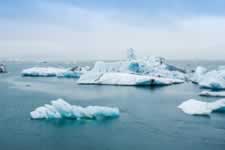
The ocean is a huge part of our planet, covering 70% of the Earth's surface. It is home to many different types of plants and animals, providing them with a place to live and food to eat.
As the Earth warms, water in the ocean soaks up the heat and absorbs carbon dioxide from the atmosphere. This is good, but if the ocean gets too warm, it can cause some big problems.
Water expands as it gets warmer, resulting in higher sea levels. Along with the melting of polar ice caps and glaciers, this can lead to flooding and habitat loss in areas near the ocean. Scientists have found that since 1900, sea level has risen 8 inches.
Too much carbon dioxide in the ocean affects the ocean's chemistry, making it too acidic. Too much acid can hurt marine life and is very harmful to coral reefs. They can become bleached (turn white) and even die off completely. Since 2000, almost 25% of the Earth's coral reefs have been lost.
Warming waters can confuse fish and marine mammals, forcing them to look for new places to find food and survive. This can set off a chain reaction and affect marine species and industries like fisheries that depend on the ocean.
Oceans play an important role in the fight against climate change. That's why scientists are working hard to find ways to restore and preserve our oceans' health.
Source: wordville.com/ReadingComp/ClimateOceans.html Oceans and Climate Change
©Courseware Solutions Wordville.com for Fun English Language Arts Learning


